

Basham’s Party Pink
Basham’s Party Pink
(Lagerstroemia indica × fauriei ‘Basham’s Party Pink’)
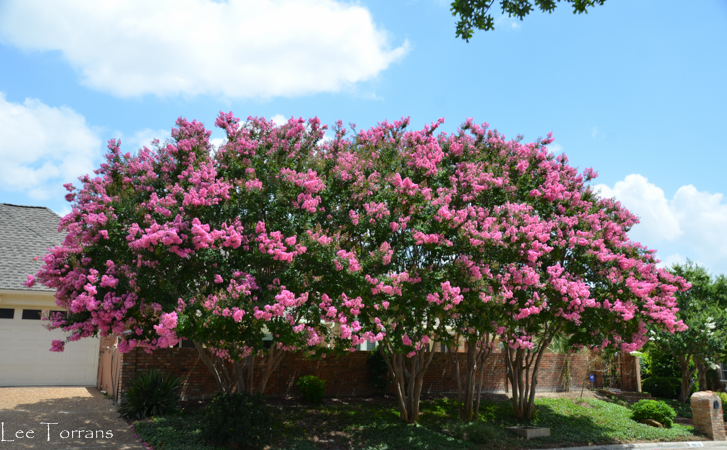
Introduced in 1965 by Texas horticulturist Lynn Lowrey, ‘Basham’s Party Pink’ is a hybrid between Lagerstroemia indica and Lagerstroemia fauriei. The cultivar was named in honor of Bill Basham, a notable horticulturist from Houston, Texas. Recognized for its exceptional qualities, it has been designated as a Texas Superstar® plant
Uses in Landscaping
- Specimen Tree: Serves as a focal point in gardens and landscapes
- Shade Tree: Provides moderate shade for patios, walkways, and outdoor living areas
- Street Tree: Suitable for planting along streets and driveways due to its upright growth habit
- Wildlife Attraction: Attracts bees, butterflies, and birds, enhancing local biodiversity
General Information
- Common Name: Basham’s Party Pink Crape Myrtle
- Scientific Name:Lagerstroemia indica × fauriei ‘Basham’s Party Pink
- Family: Lythraceae
- Plant Type: Deciduous flowering tree
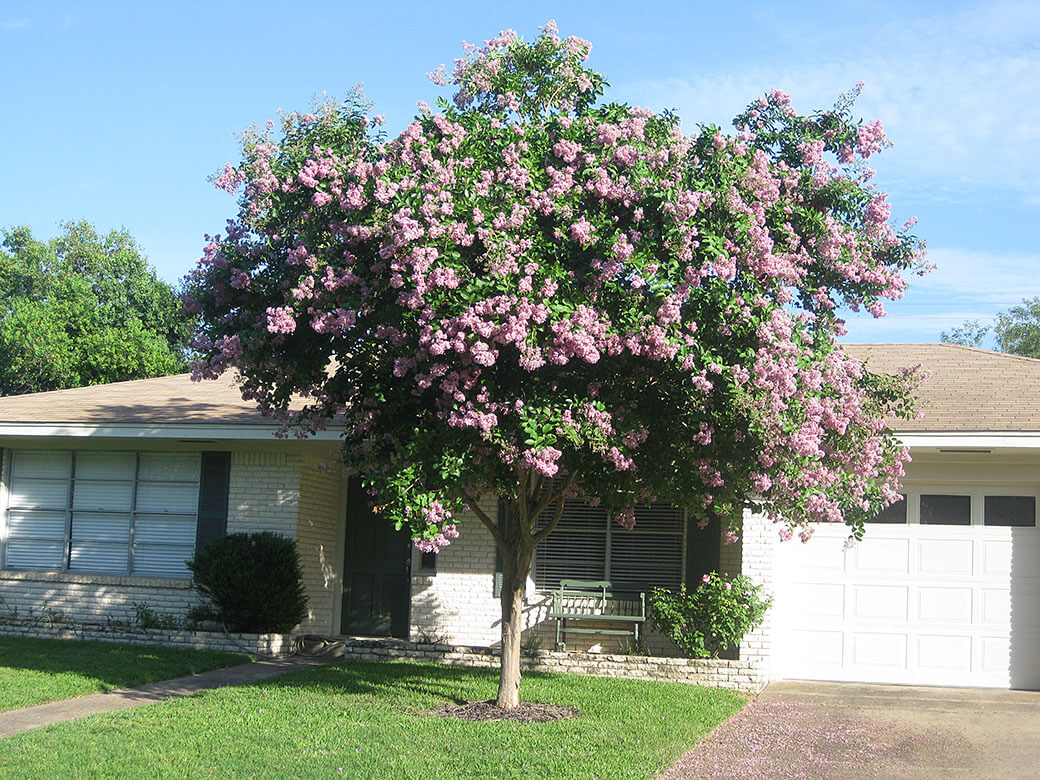
- Mature Size: 20-30 feet tall, with a spread of 15-25 feet
- Growth Rate: Fast-growing; can achieve 12-15 feet of growth per year under optimal conditions
Description
- Foliage: Dark green leaves that transition to shades of orange-red in the fall
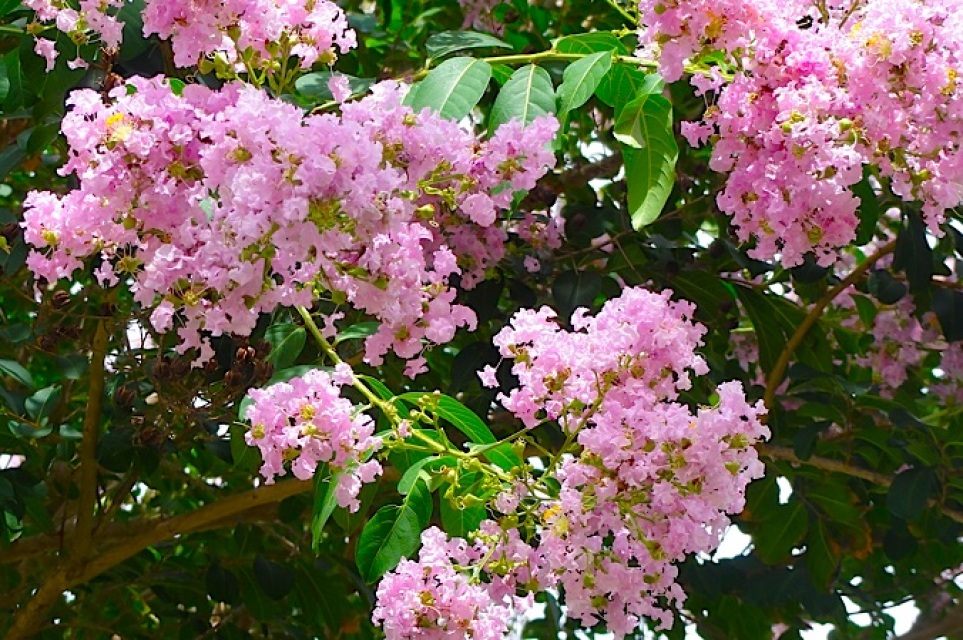
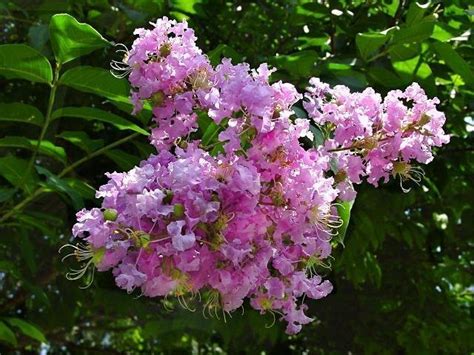
- Flowers: Large clusters of soft lavender-pink blooms appearing from late spring through early summer
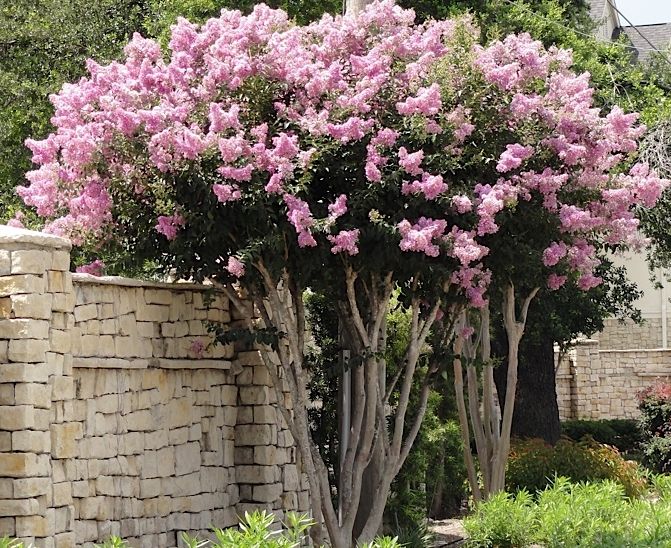
- Bark: Smooth, exfoliating bark that reveals a mosaic of light tan, gray, and silver hues with reddish-brown undertones
- Form: Upright, vase-shaped canopy suitable for single or multi-trunk growth
Growing Conditions
- Sunlight: Thrives in full sun; at least 6 hours of direct sunlight daily
- Soil: Adaptable to various soil types, provided they are well-drained; tolerates slightly acidic to slightly alkaline soils
- Watering: Requires regular watering during establishment; exhibits drought tolerance once established
- Climate Zones: USDA Hardiness Zones 7-9
Care & Maintenance
- Pruning: Perform in late winter or early spring to maintain desired shape and promote vigorous blooming
- Fertilizing: Apply a balanced, slow-release fertilizer in early spring for optimal growth and flowering
- Pest & Disease Resistance: Demonstrates resistance to powdery mildew and common pests; selecting planting sites with good air circulation enhances health
Additional Notes
- Disease Resistance: The hybrid vigor from its parent species imparts enhanced resistance to diseases and pests.
- Blooming Season: While the primary bloom period is late spring to early summer, with adequate moisture and favorable conditions, it may produce additional flushes of blooms throughout the summer.

You may also like

Working
March 22, 2025

Why You Should Read Every Day
March 20, 2025

Tips to Succeed in an Online Course
March 20, 2025